Evidence dossier

Boyfriend Material

M/M romanceM/M romanceHumorousComplex CharactersFake RelationshipStrong NarrationStrong ChemistryLikable Lead

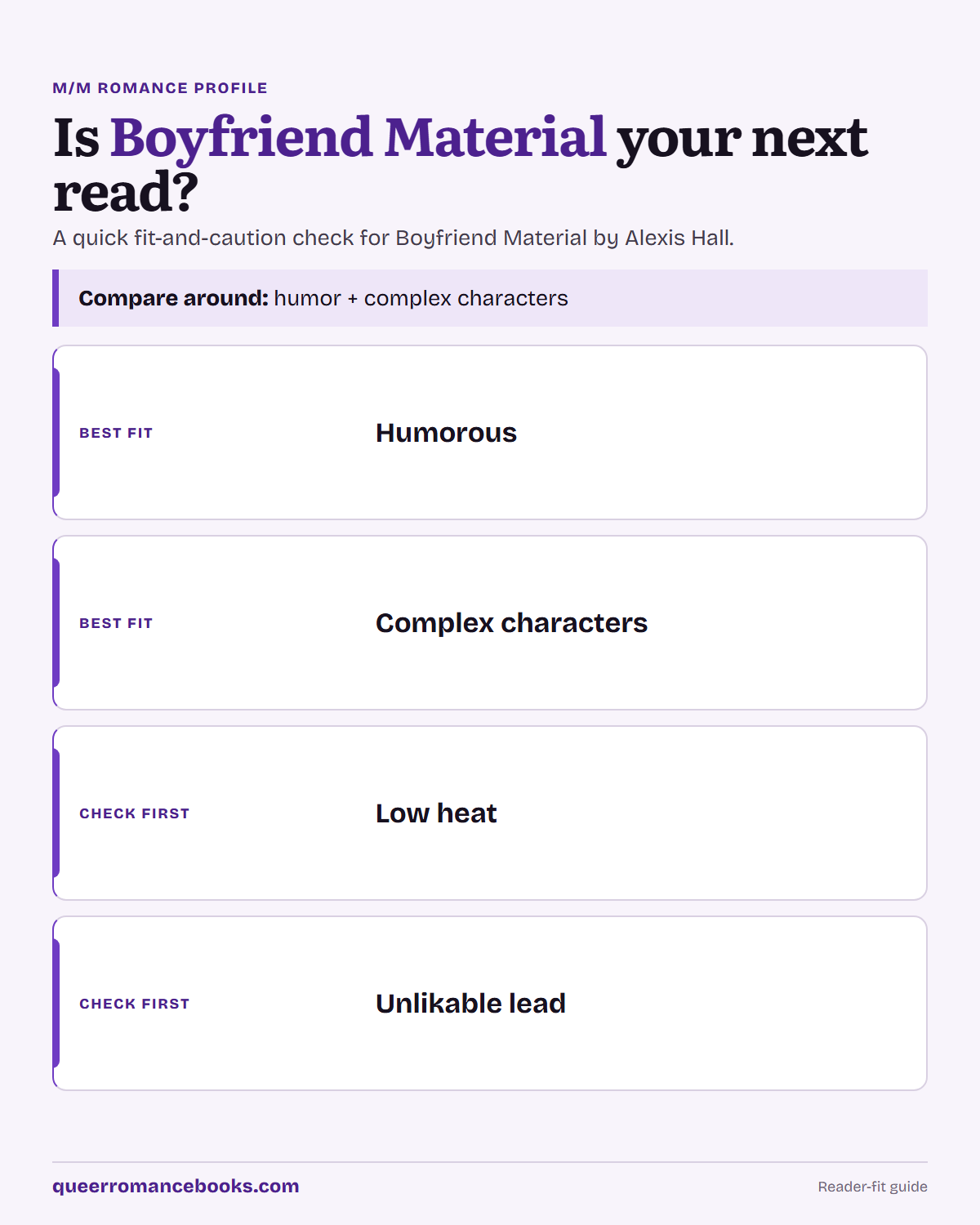
A M/M romance profile for Boyfriend Material by Alexis Hall, organized around Humorous, Complex Characters, Fake Relationship.

* Amazon affiliate link. How affiliate links work.

At a glance

M/M romanceHumorousComplex CharactersFake RelationshipStrong NarrationStrong ChemistryLikable LeadFound Family
10substantive sources
144grounded observations
25recurring signals

Who this may suit

Try it if you want…

  • You want humorous
  • You want complex characters
  • You want fake relationship

Check before choosing if…

  • You prefer to avoid low heat
  • You prefer to avoid unlikable lead
  • You prefer to avoid satisfying ending

What the evidence says

What readers repeatedly liked

  • Complex Characters. The friend group feels realistic with varied opinions and giving both good and bad advice; Luc and Oliver have different histories of hurt and betrayal, with distinct defense mechanisms—Luc uses casual sex and preemptive awfulness, while Oliver hides behind rigid control; Luc is a mass of insecurities with trust and self-esteem issues, endearing and vulnerable despite outward prickliness, and Oliver is kind, considerate, intuitive, and charming despite seeming stuffy. Supported by 9 sources (source 53, source 54, source 10614, source 10617, source 10619, source 10620, source 10960, source 10964, source 18923).
  • Humorous. Readers love the humor, calling it their ideal type of humor with careful word choice; Described as a lovely funny cliche romcom; The reviewer found the book extremely funny, describing eye-watering, tea-aspirating laughter that was rare and magical. Supported by 9 sources (source 53, source 54, source 10614, source 10616, source 10617, source 10619, source 10620, source 10960, source 18923).
  • Character Growth. Characters showed more growth in book 1 than in the sequel; Both leads share a core struggle not with loving but with allowing themselves to be loved, which the story explores meaningfully; Luc gradually comes to accept he is worth loving and learns to recognize when others, notably Oliver, are struggling too. Supported by 7 sources (source 54, source 10616, source 10617, source 10619, source 10960, source 10964, source 18923).
  • Witty Writing. The writing is praised as approachable, thoughtful, humorous, and at times heartbreaking; The reviewer praises the comedic writing and the large cast of riotously diverting, bright, and glorious supporting characters; Hall’s trademark humor and love of pop-culture are present throughout, with sharply observant and self-deprecating writing. Supported by 7 sources (source 53, source 54, source 10614, source 10617, source 10619, source 10620, source 10960).
  • Fake Relationship. The fake-relationship premise is executed very well, turning a commonly used plotline into something special; The fake relationship is praised as more of a team effort than a big dark secret, setting up the right level of absurdity; The fake dating trope is used to great effect, allowing both characters time to practice relationships. Supported by 3 sources (source 54, source 10619, source 10960).
  • Strong Narration. The audiobook narrator is repeatedly praised as amazing, brilliant, and top tier; Audiobook especially loved; The audiobook narrator was superb, with spot-on accents, excellent distinction among a large cast, and brilliant female voices. Supported by 6 sources (source 10614, source 10616, source 10619, source 10620, source 10960, source 10964).
  • Likable Lead. Luc and Oliver are written endearingly and aren’t the typical perfect main characters; Reader sympathized with the main character in the first book; Luc is endearing and vulnerable despite being short-tempered and self-absorbed; Oliver is completely charming and perfect for Luc. Supported by 5 sources (source 10614, source 10616, source 10619, source 10620, source 10960).
  • Low Heat. There is much less sex than in other Alexis Hall books, and the scenes are written less explicitly; they are sweet but some readers missed the more nuanced sex scenes of the Spires series; The book is noted as closed-door, a departure from Hall’s usual explicit style; one reader wished the sex scenes were more steamy; The book is a little sexy, with the author understanding that sometimes not showing things is hotter than describing them in detail. Supported by 3 sources (source 53, source 10619, source 10960).
  • Strong Chemistry. Dynamic described as cute in the first book; Despite being very different with legitimate reasons their relationship shouldn’t work, Luc and Oliver’s relationship works wonderfully and the reviewer ended up thoroughly swoony for them both; From their first fake-date the chemistry between Luc and Oliver sings, and their gradual progression from fake to real feels extremely well done. Supported by 5 sources (source 54, source 10616, source 10617, source 10619, source 10620).
  • Easy Comfort Read. The book feels like a warm hug and readers wanted to hug the characters; Considered a cozy reread and read many times; A fun, undemanding book. Supported by 4 sources (source 53, source 54, source 10614, source 10616).
  • Satisfying Ending. The ending is loved for feeling healthy, long-lasting, and lifelike; The ending is praised for opting out of the standard forgiveness arc with Luc’s dad and letting Luc be vocally angry and set limits on his own terms. Supported by 2 sources (source 10614, source 10960).
  • Beginner Friendly. The book introduced readers to genre romance and to Alexis Hall’s writing; Was one of reader’s first MM books and they adored it; A reader new to romance novels loved the book and felt it subverted gender roles and toxic masculinity in a way that felt good. Supported by 3 sources (source 10614, source 10616, source 10960).
  • Banter. The romance is full of snark, tenderness, and genuine affection; The banter between the leads is enjoyable; Luc and Oliver make each other laugh with witty exchanges throughout their developing relationship. Supported by 3 sources (source 53, source 54, source 10619).
  • Found Family. Luc’s friends are praised as amazing people with a realistic group chat dynamic; Luc’s circle of friends are a quirky, bonkers bunch who clearly adore each other, reminiscent of a Richard Curtis film; Luc’s friend group and his mother are praised as amazing support systems that a reader was jealous of. Supported by 3 sources (source 10614, source 10619, source 10960).
  • Romance Forward. Luc and Oliver light up the pages whenever they are together, and the book is romantic, funny, and completely wonderful; One reader found the book exhausting because it mostly focused on relationship problems, saved only by the excellent writing. Supported by 2 sources (source 10619, source 10960).
  • Emotional. The emotional themes of wariness and skepticism from past hurts broke the reviewer’s heart for both characters, and the book was worth every pang; Beneath the humor there is a serious, emotional side about self-worth, acceptance, and being true to oneself; The book made the reviewer cry a little and feel sad at times, with poignant moments of tentative closeness. Supported by 3 sources (source 54, source 10617, source 10619).
  • Hea. A reader felt the book lacked a fluffy HEA epilogue; Readers debate whether the ending is HEA or HFN; some see Luc and Oliver as an HEA while others feel it is more HFN. Supported by 2 sources (source 10614, source 10960).
  • Tender. The book is described as sweet, funny, and romantic, like a warm hug; The book is sweet alongside being funny. Supported by 2 sources (source 53, source 10614).

What readers repeatedly flagged

  • Low Heat. A reader wishes there were spicier scenes in the book; There is much less sex than in other Alexis Hall books, and the scenes are written less explicitly; they are sweet but some readers missed the more nuanced sex scenes of the Spires series; Multiple readers wished for more steam, noting a preference for at least a little over the cuddling-focused content. Supported by 4 sources (source 10614, source 10619, source 10620, source 10960).
  • Unlikable Lead. Luc found annoying and unlikeable by one reader; One reader never warmed to Luc and was not convinced he warmed to himself either; Luc’s character and shitty attitude is infuriating and hard to stand. Supported by 3 sources (source 10616, source 10960, source 18923).
  • Flat Characters. Characters are noted as not being quite as deep as those in the author’s Spires series; Alex Twaddle is criticized as way too dumb and almost too over the top to be believable, though some see it as a meta joke. Supported by 2 sources (source 10620, source 10960).
  • Trauma. The book depicts severe depression and a problematic father relationship; Luc has abandonment and trust issues from his father leaving, media scrutiny, and a terrible breakup followed by self-destructive partying. Supported by 2 sources (source 54, source 18923).
  • Hea. A reader felt the book lacked a fluffy HEA epilogue; Readers debate whether the ending is HEA or HFN; some see Luc and Oliver as an HEA while others feel it is more HFN. Supported by 2 sources (source 10614, source 10960).
  • Rushed Ending. Multiple readers felt the ending came too quickly, with Luc and Oliver not getting a minute to settle into being happy; an epilogue was wanted; The book ends in mid-conversation and could have used a slightly longer last chapter or epilogue. Supported by 2 sources (source 54, source 10619).
  • Weak Chemistry. One reader did not finish the book because they felt no chemistry between the leads; The relationship was unstable throughout the book. Supported by 2 sources (source 10960, source 18923).

Where reader reactions differ

  • Character Growth. Characters showed more growth in book 1 than in the sequel; Both leads share a core struggle not with loving but with allowing themselves to be loved, which the story explores meaningfully; Luc gradually comes to accept he is worth loving and learns to recognize when others, notably Oliver, are struggling too. Supported by 7 sources (source 54, source 10616, source 10617, source 10619, source 10960, source 10964, source 18923).
  • Low Heat. A reader wishes there were spicier scenes in the book; There is much less sex than in other Alexis Hall books, and the scenes are written less explicitly; they are sweet but some readers missed the more nuanced sex scenes of the Spires series; The book is closed-door: sex happens but is not shown on page. Supported by 5 sources (source 53, source 10614, source 10619, source 10620, source 10960).
  • Satisfying Ending. The ending is loved for feeling healthy, long-lasting, and lifelike; The ending is praised for opting out of the standard forgiveness arc with Luc’s dad and letting Luc be vocally angry and set limits on his own terms; The ending was not satisfying. Supported by 3 sources (source 10614, source 10960, source 18923).
  • Romance Forward. Luc and Oliver light up the pages whenever they are together, and the book is romantic, funny, and completely wonderful; One reader found the book exhausting because it mostly focused on relationship problems, saved only by the excellent writing; The book fits rom-com structure more than romance, focused on personal and romantic development. Supported by 3 sources (source 54, source 10619, source 10960).
  • Hea. A reader felt the book lacked a fluffy HEA epilogue; Readers debate whether the ending is HEA or HFN; some see Luc and Oliver as an HEA while others feel it is more HFN. Supported by 2 sources (source 10614, source 10960).

Individual observations

  • Distinctive Voice Performance. The narrator uses different voices but the French accent for Luc’s mom is criticized as less than stellar.
  • Weak Narration. One listener found the audio okay but not sparky, with Oliver’s accent not posh enough, though distinct from Luc’s.
  • Third Act Breakup. The leads hurt each other one too many times, culminating in Oliver leaving the morning after they make love.
  • Hfn. The story ends Happy for Now rather than establishing a HEA, with both characters admitting they have growing to do but are willing to grow together.
  • Genre Fans. The reviewer cannot see anyone being disappointed in this book regardless of why they pick it up.
  • Slow Build Heat. The relationship is a slow burn with poignant tentative details of closeness developing gradually.
  • Uneven Pacing. Reader felt the beginning dragged due to too much time spent at Luc’s job, such as the wait in the lounge scene before the dinner at the club.
  • Well Paced. The romance is beautifully written and well-paced.
  • Strong Prose. The writing was strong.
  • Emotional Intimacy. The romance develops gradually through shared experience and interaction, with physical intimacy growing in tandem with emotional intimacy.

Reader sources

  1. cannonballread.com – Independent review
  2. smartbitchestrashybooks.com – Independent review
  3. Reddit discussion
  4. Reddit discussion
  5. twimom227.com – Independent review
  6. allaboutromance.com – Independent review
  7. Reddit discussion
  8. Reddit discussion
  9. Reddit discussion
  10. Reddit discussion

Books with a similar fit

Open the full Taste Transfer matcher

How this page works

This book cleared the full Queer Romance Books evidence gate. Reader signals shown here come from stored full pages and paragraph-grounded observations; search snippets are never treated as evidence.

Read the methodology

See the current edition

No cover, price or rating is reproduced on this site.

View on Amazon *